
Why subject matter expertise should drive your go-to-market strategy
The companies winning the most competitive markets are doing it with deeper knowledge, not bigger sales teams. Jay Janes sets out how to build a go-to-market model around expertise

There is a go-to-market playbook that most organizations still default to. Hire salespeople. Build a marketing team. Hand them a product, a pitch deck and a quota. Then wonder why conversion rates stall, sales cycles stretch and buyers take months to trust you enough to sign. An expertise-led go-to-market strategy challenges that model at its core, and for good reason.
That model made sense in a different era. It does not make sense now.
The buyers that executives, founders and revenue leaders are selling to today are better informed than before. They have already read the white papers. They have already watched the webinars. By the time your sales representative gets in front of a prospect, that prospect is not looking for an introduction to the problem. They are looking for someone who understands it more deeply than they do. This shift is a permanent change in how value is perceived and how trust is earned, rather than a trend.
The generalist model is mismatched, not broken
To be fair, generalist sales and marketing professionals have built remarkable businesses, and many will continue to do so. The issue is fit rather than capability.
When you are selling a commoditized product at volume, a generalist motion works well. When you are selling a complex, consultative or high-stakes solution to a sophisticated buyer, it often falls short.
The problem is that most companies, including those offering genuinely differentiated products, are still running a generalist playbook in a specialist world. They are sending people who know enough to answer the standard objections but not enough to reshape a buyer’s thinking about the problem entirely. That gap is where deals go to die.
Sophisticated buyers want to be understood rather than handled. The only people who can do that consistently are those with real, substantive, lived expertise in the domain they are selling into.
What an expertise-led go-to-market strategy looks like
Shifting to an expertise-led go-to-market strategy does not mean replacing your entire commercial team overnight. It means restructuring how you deploy knowledge throughout the buying process, and placing credibility at the center of your revenue engine.
In practical terms, this requires three foundational changes.
Hire for domain depth, not just commercial skill. When building revenue teams, the instinct is to look for people with a track record of hitting quota, a polished communication style and familiarity with the sales process. Those things matter, but they are not sufficient when your buyer is a seasoned executive who has lived with the problem you are solving for a decade. You need people who have been in that seat. People who understand the pressures, the constraints, the internal politics and the language of the industry. They do not just know your product. They know the world your customer operates in.
Build content and marketing around insight, not promotion. Most B2B marketing is still, at its core, promotional. It leads with the product. It leads with features. It leads with the company story. An expertise-led go-to-market strategy inverts that entirely. The content you produce should make your buyer smarter before they ever speak to your team. It should surface problems they had not fully articulated. It should reframe assumptions they had accepted as fixed. When your marketing creates genuine intellectual value, it does more than generate leads. It generates authority.
Structure the sales process as a consultation, not a pitch. This requires a real cultural shift inside your commercial organization. Discovery conversations should feel like advisory sessions, not qualification calls. Your team should be comfortable challenging a buyer’s thinking, not just validating it. That kind of interaction is only possible when your people genuinely know more about the domain than the person across the table. It cannot be scripted. It cannot be trained in two weeks. It has to be earned through experience and depth.
The trust economy rewards expertise
There is a concept worth sitting with here. In an environment where information is abundant and attention is scarce, the currency that actually moves buyers forward is not information. It is trust. In B2B, at the executive level especially, trust is almost exclusively built through demonstrated competence.
When your team walks into a room and the buyer immediately recognizes that these are people who have lived inside the problem, the dynamic shifts. You stop being a vendor and start being a resource. You stop managing a sales process and start shaping a decision. That is a fundamentally different position to occupy, and it compounds over time.
Organizations that build an expertise-led go-to-market strategy do not just win deals differently. They retain clients differently. They expand accounts differently. They generate referrals differently. The relationship was built on something more durable than a well-structured pitch: the kind of credibility that only comes from people who genuinely know what they are talking about.
The organizational challenge is real, and it is worth solving
Building this kind of organization is not without its difficulties. Subject matter experts are harder to find than generalist salespeople. They are often more expensive. They may not arrive with a polished commercial instinct, which means investing in enabling that skill. Persuading a board or leadership team accustomed to measuring success in pipeline volume and activity metrics to back a deeper, slower-burn model requires clear thinking and conviction.
Here is what consistently happens inside organizations that commit to this shift. Sales cycles, while sometimes longer in the early stages as the model matures, begin to shorten as reputation compounds. Win rates climb, not because the pitch got better, but because the credibility became undeniable. Customer lifetime value increases in ways that fundamentally change the unit economics of growth.
There is also an internal effect that often goes unacknowledged. When subject matter experts lead your go-to-market motion, the entire organization sharpens. Product teams receive better feedback. Marketing gains a more precise positioning. Leadership gets a clearer signal on where the market is actually heading. Expertise in the field does not stay in the field. It flows back through the company and makes everything work better.
Leadership’s role in making this real
This kind of shift does not happen from the bottom up. It requires executives and founders to make a deliberate decision about what kind of go-to-market organization they are building, and then to hold that position even when it is inconvenient.
That means resisting the pressure to fill headcount fast with people who look the part on paper but lack the domain depth to deliver. It means investing in expert content as a genuine strategic asset, not a content marketing checkbox. It means measuring commercial success not just by volume, but by the quality and durability of the relationships being built.
Most importantly, it means being honest about what your buyers actually need from you. In most complex B2B markets, they do not need more salespeople. They need more of the right expertise, showing up at the right moments, in the right form.
The organizations that are winning have already made this choice
The companies consistently winning in the most competitive markets win because their buyers trust them, rather than because they have the most aggressive sales culture. Because their teams understand the problem at a level that is genuinely rare. Their content, conversations and process all reflect a depth of expertise hard to replicate.
An expertise-led go-to-market strategy is the harder path in the short term, but the more defensible one. In a market where buyers are increasingly immune to polished pitches and increasingly drawn to genuine insight, it is the approach that will compound.
The harder question is whether your organization is willing to commit to building it.

Get The VETTDD BriefingThe week in the technology channel, every week.
Subscribe free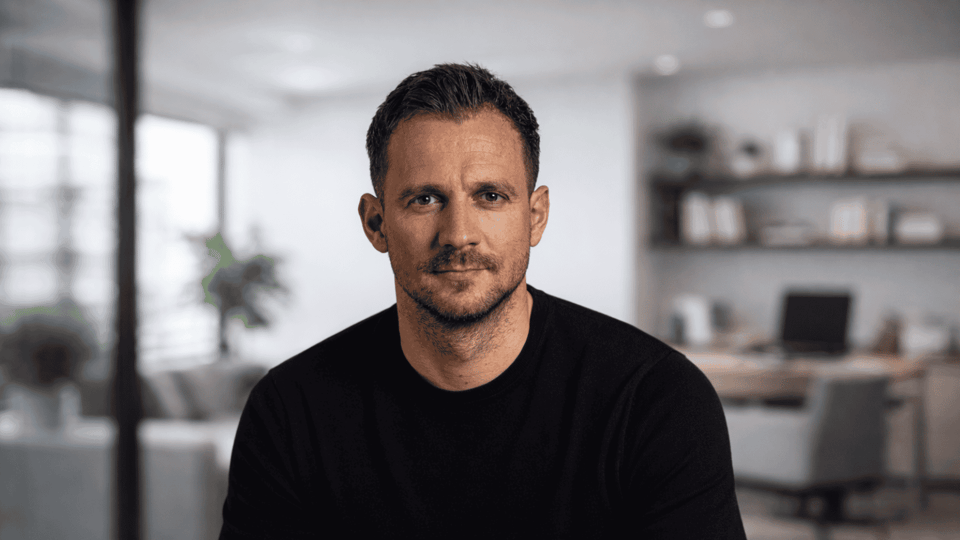
Jay Janes
Founder and editor of VETTDD. Former chief revenue officer at Giacom and director of growth at intY, where revenue grew from £19m to £40m.