Why inclusive hiring practices expose the talent shortage as a myth
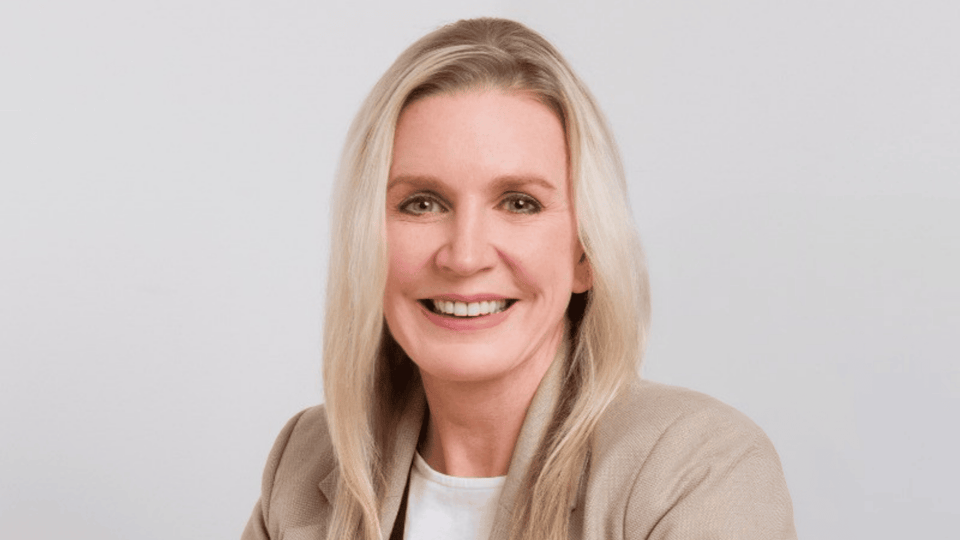
Michelle Carson, founder of executive search firm Holmes Noble, on why the UK’s so-called talent crisis is largely self-inflicted. The companies that recognize this first will have a decisive advantage
Every week, in boardrooms across the UK, the same conversation plays out. Executives reference a shrinking talent pool. Recruiters warn of widening skills gaps. HR leaders build entire workforce strategies around the assumption that capable people are simply hard to find. Last year, 70% of business leaders reported recruitment difficulties, according to a survey by the British Chambers of Commerce. The data seems to confirm what everyone already believes. Inclusive hiring practices, however, tell a different story entirely.
The talent shortage is real in some sectors. No one is dismissing the genuine pressures that businesses face. But there is a distinction that too few leaders are willing to make: the difference between a shortage of talent and a shortage of talent that your current process is capable of finding. These are not the same problem. And the solution to each is entirely different.
The system is the problem, not the pipeline
Michelle Carson, founder and chair of executive search firm Holmes Noble, has spent 30 years placing leaders across industries. Her view is clear and unflinching: the UK does not lack talent. What it lacks is the willingness to look for it in the right places and use the right methods.
“Employers are facing self-inflicted skill shortages caused by rigid hiring processes and outdated apprenticeship designs that systematically exclude anyone who doesn’t fit the traditional mold,” she argues. Carson, who leads her firm as a business founder with autism and ADHD, brings both personal and professional weight to that statement. She has watched conventional hiring act as a filter that consistently removes capable people while rewarding those who are simply good at navigating the process.
That is a critical distinction. Passing a structured interview or performing well in an assessment center is not the same as being exceptional at a job. Yet most organizations treat them as equivalent. By relying on narrow selection methods, businesses end up competing for the same fraction of the workforce while dismissing the majority.
The qualification trap is quietly narrowing your talent pool
One of the most significant contributors to this problem is the gradual drift toward degree-level thresholds in hiring and apprenticeship design. In principle, raising the standard of apprenticeships is a sound ambition. In practice, attaching formal academic credentials to entry requirements recreates the very barriers these programs were meant to lower.
Government statistics confirm this trend. A growing proportion of apprenticeship starts are now at Level 4 and above, including degree-equivalent programs, while intermediate and lower-level starts have declined. The intent may be to raise quality. The effect is to reduce access.
Carson frames this as a capital misallocation problem, and she is right. Public funding and internal training budgets are being directed toward assessment methods that narrow the candidate pipeline rather than broaden it. The organizations paying the price are the ones that cannot fill roles. The individuals paying the price are those whose capabilities go unseen because they do not fit the expected academic profile.
This is not a diversity initiative. It is an economic argument. When you design a hiring process that only recognizes one kind of intelligence, one kind of learning and one kind of communication style, you are limiting your options rather than raising your standards.
What neurodivergent talent reveals about broken hiring
The conversation around inclusive hiring practices becomes particularly clear when applied to neurodivergent candidates. Individuals with dyslexia, ADHD, autism and other cognitive differences are disproportionately filtered out by conventional hiring processes, not because of a lack of ability, but because of a mismatch between the process and the person.
Assessment centers and structured interviews are optimized for a particular kind of performance. They tend to reward social fluency, calm under pressure and the ability to present ideas in a linear and time-pressured format. For a significant proportion of highly capable candidates, these conditions actively suppress the very strengths that would make them exceptional contributors.
Carson advocates for practical work trials as a far superior measure of potential. Rather than asking candidates how they would approach a challenge, organizations can watch them do it. The evidence is visible, practical and far harder to fake than a polished interview answer. Businesses that shift their focus from credentials to demonstrable ability routinely discover that the talent was there all along.
The numbers behind this are sobering. A 2024 survey of 500 neurodiverse founders, conducted by E. Ives for The Entrepreneurs Network in partnership with Barclays Eagle Labs, found that nearly two-thirds had struggled to secure employment because of their neurodiversity. A further 64% felt that starting their own business was the only viable path to earning a living. What stopped these people was the front door, not a lack of ambition or capability.
Retention is where inclusive hiring practices earn their real return
Getting people through the door is only half the equation. The other half is keeping them. And this is where many organizations, even those with genuine intentions around inclusion, fall short.
Neurodivergent employees often prioritize task completion over social performance. They tend to be focused, thorough and deeply committed to the quality of their work. In a culture that places high value on visibility, presenteeism and after-hours socializing, those qualities can be misread as aloofness or a lack of team spirit. Carson experienced this directly early in her career, staying late to complete her work and being treated as an outcast for it rather than being recognized for her dedication.
This is not an edge case. According to the Chartered Institute of Personnel and Development, one in five neurodivergent employees has experienced harassment or discrimination because of their neurodivergence. Only 52% feel their organization fosters a genuinely open and supportive climate for discussing neurodiversity, and just 37% believe their employer provides meaningful support.
These figures reveal a retention crisis hidden within a recruitment crisis. Businesses spend significant resources attracting talent they then fail to retain, because the culture that greets new employees is no more accommodating than the hiring process that nearly excluded them.
The practical case for getting this right
The good news is that the adjustments required are neither expensive nor operationally complex. Carson is clear on this point. Many leaders overestimate the scale of change required and use that assumption as a reason not to act. In reality, the improvements that make the most difference are straightforward.
Sending briefing documents in accessible formats. Providing interview questions in advance. Checking seating preferences to reduce sensory overload. Asking candidates what they need to perform at their best, then listening to their answer. These are basic acts of good leadership, not radical interventions. And they send a message to every candidate in the process: this organization is serious about seeing your actual capability, not just your ability to perform under conditions designed for someone else.
Boards and senior leaders carry a specific responsibility here. Creating an environment where employees feel safe to share their needs is a leadership function, not an HR one. The tone is set at the top, and when the top treats inclusion as a genuine business priority rather than a compliance exercise, the culture follows.
The leaders who act now will have a structural advantage
The UK’s talent challenge is real. Rising costs, evolving skills requirements and demographic shifts are genuine pressures. But the organizations that treat these pressures as external forces beyond their control are missing the more important point: a significant proportion of untapped talent already exists, and it is being systematically overlooked by processes that were never designed to find it.
Inclusive hiring practices are less a compassionate concession to diversity expectations than a strategic response to a competitive environment where businesses willing to look further and hire smarter will consistently outperform those that keep fishing from the same small pool.
The talent is there. The question every executive should be asking is whether their process deserves to find it.

Get The VETTDD BriefingThe week in the technology channel, every week.
Subscribe freeMichelle Carson
Founder and chair of Holmes Noble, an executive search firm.