AlphaSense’s 25-fold token surge is the new meter for channel margin
Samantha Greenberg, chief financial officer of AlphaSense, told Raconteur that token consumption on its platform is growing 25-fold year on year. A UK partner’s own accounts need a consumption line before customers’ AI bills arrive
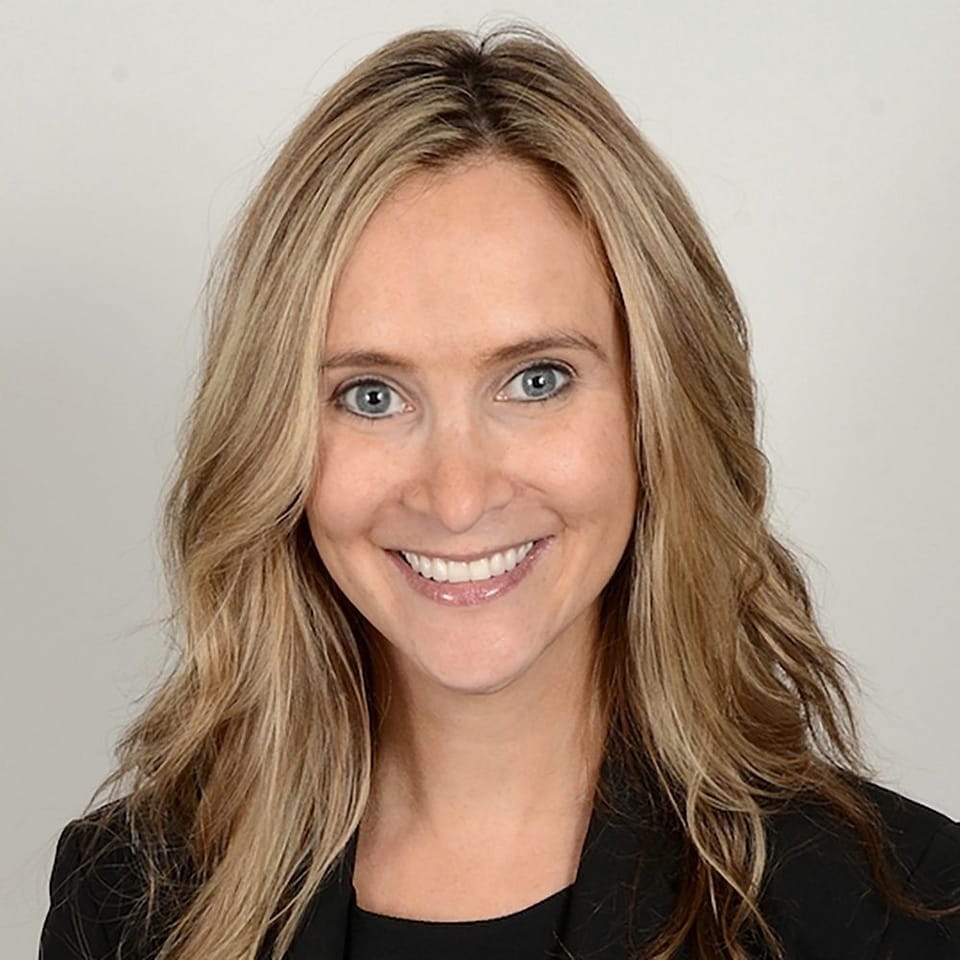
- AlphaSense’s recurring revenue passed $600m in the first quarter of 2026, its June release says, while Greenberg told Raconteur that token consumption is growing 25-fold to a 20 trillion run-rate.
- AlphaSense’s first strategic channel partner is Accenture, an equity investor with a services bench, which tells resellers what a consumption vendor wants from a partner.
- A partner’s accounts need four changes: a separate consumption revenue line, a reconciled pass-through cost line, working capital for billing in arrears and a governance fee that does not depend on tokens.
On 3 June AlphaSense, the New York market-intelligence company, said it had raised $350m (£261m) at a $7.5bn (£5.6bn) valuation, according to its press release. The same release put annual recurring revenue above $600m in the first quarter of 2026, up from the $500m the company announced in October 2025, and named Accenture Ventures among the lead investors. One line lower down matters more: Accenture, the release says, becomes AlphaSense’s first strategic channel partner.
The figure that matters most to the channel was not in the release. It came from Samantha Greenberg, appointed AlphaSense’s chief financial officer in April, in an interview with Raconteur published on 25 September. Greenberg told Raconteur that revenue is growing at well over 40% a year and that international customers now account for 21% of recurring revenue. Then the number that matters: token consumption on the platform is growing 25-fold year on year, she said, and run-rate consumption has reached 20 trillion tokens.
Greenberg’s background is investing. AlphaSense’s announcement of her appointment on 14 April says she joined from ID.me, where she was chief financial officer, after founding Margate Capital Management, a hedge fund, and earlier roles at Citadel, Goldman Sachs and Paulson & Co. A modern CFO, she told Raconteur, needs an investor’s skills: separating signal from noise and allocating capital well. “Finance should not only look back at what happened.” The job, in her account, is to see what is happening now and decide whether to act on it, and she treats AI as the most powerful productivity tool available rather than as something to fear.
She also said something a channel leader should read twice. Software pricing, Greenberg told Raconteur, is moving from seats to consumption and outcome-based models, and that shift makes forecasting harder. She was talking about vendors’ forecasts, her own included. It applies with more force to the partner whose margin sits between a vendor like hers and a customer that has not yet seen its first AI bill.
The meter is spinning faster than the invoice
Put the two growth rates side by side. Revenue at AlphaSense is growing at something over 40%. Token consumption is growing at 2,400%. The metered quantity is rising up to about 60 times faster than the billed one. Part of that gap is a young product line compounding from a small base, and part is a company absorbing the cost of usage to win accounts. Neither is likely to last. A vendor whose costs track tokens and whose prices track seats has two ways out: charge for the tokens, or find customers who use fewer of them. No vendor chooses the second.
That is why the AlphaSense numbers are a clearer signal than any pricing announcement. A price list tells you what a vendor wants to charge. A consumption curve tells you what it will have to charge. Every vendor a UK reseller carries is on the same curve, and few will say where.
Accenture was chosen for a reason
Now look at who AlphaSense picked as its first channel partner. Not a distributor or a reseller but a global systems integrator that took an equity stake and, in the release’s words, will “build AI market intelligence and workflow automations into agentic systems at client organizations”. The partner’s job is to get the tokens used, inside processes the customer runs every day. Consumption vendors want partners that drive consumption, and the first one AlphaSense signed brings a services bench and a balance sheet rather than a price list.
UK resellers should read that as a description of the competition, not as a snub. The vendor that meters usage does not need someone to process a renewal. It needs someone to make usage grow, and someone to stop it growing faster than the customer can afford. Those are two different services, and a partner can sell both.
What a partner’s accounts should show
A partner built on per-user SaaS has a profit and loss account with one shape: subscription revenue, a vendor cost of sales at a known discount and a margin that is fixed at signature. Consumption breaks all three, and the fix belongs in the accounts before the sales deck.
First, consumption revenue needs its own line, separate from subscriptions. If the two are pooled, the board will not see that the growing part of the business carries the thinner margin until the year-end tells them.
Second, the vendor’s metered cost needs its own cost-of-sales line and a stated pass-through margin. A 20% discount on a seat is a fixed margin. A 20% margin on tokens is only a margin if the partner’s system meters the same tokens the vendor’s does. Reconciliation becomes a monthly job, and someone has to own it.
Third, budget for working capital. Seats are billed in advance. Consumption is billed in arrears, and the partner pays the vendor before the customer pays the partner. A customer whose usage grows 25-fold over a year is a customer whose unpaid balance can do the same. Credit limits and usage caps belong in the contract.
Fourth, put governance on the invoice. Forecasting a customer’s consumption, capping it and explaining the bill is a service, and it should carry a fee that does not depend on how many tokens were burned. That fee is the only part of a consumption business whose margin the partner controls, so it is the part the partner should protect.
Greenberg’s instinct is right, and it applies to the channel as much as to her own team: the finance function’s job is to see what is happening now. What is happening now is that a vendor’s meter can rise 25-fold while its revenue rises 40%, and somebody will close that gap. A vendor’s meter can run 60 times faster than its invoice for a year or two. A partner’s cannot run that way for a month.

Get The VETTDD BriefingThe week in the technology channel, every week.
Subscribe free- Raconteur, “CFO on the Spot: Five minutes with Samantha Greenberg, CFO of AlphaSense”, interview by Rayanne Harmon, 25 September 2026. https://www.raconteur.net/finance/cfo-on-the-spot-five-minutes-with-samantha-greenberg-cfo-of-payscale
- AlphaSense, “AlphaSense Raises $350M at $7.5B Valuation, and Surpasses $600M in Annual Recurring Revenue”, press release, 3 June 2026. https://www.alpha-sense.com/press/alphasense-raises-350m-at-7-5b-valuation-and-surpasses-600m-in-annual-recurring-revenue/
- AlphaSense, “AlphaSense Surpasses $500M in ARR as Adoption of Applied AI Workflows Surges”, press release, 7 October 2025. https://www.alpha-sense.com/press/alphasense-surpasses-500m-in-arr/
- AlphaSense, “AlphaSense Appoints Samantha Greenberg as Chief Financial Officer”, press release, 14 April 2026. https://www.alpha-sense.com/press/alphasense-appoints-samantha-greenberg-as-chief-financial-officer/
- AlphaSense, “About”, leadership page with company headshot of Samantha Greenberg (accessed September 2026). https://www.alpha-sense.com/about/