BMW’s AI bet: the savings are in the org chart
BMW has tied a 20% cut in divisions and management roles to AI. But in vehicle development it keeps developers as the final approvers, and that sign-off is where UK buyers’ business cases will stand or fall
- BMW’s own release links its restructuring to AI, listing systematic AI use and fewer management roles side by side as concrete measures behind its margin target.
- In vehicle development, BMW’s agents are to support work from requirements to release, but developers monitor, review and finally approve the results.
- UK buyers should name the approver for each agent-run process, size that review work and start where their own data runs deepest.
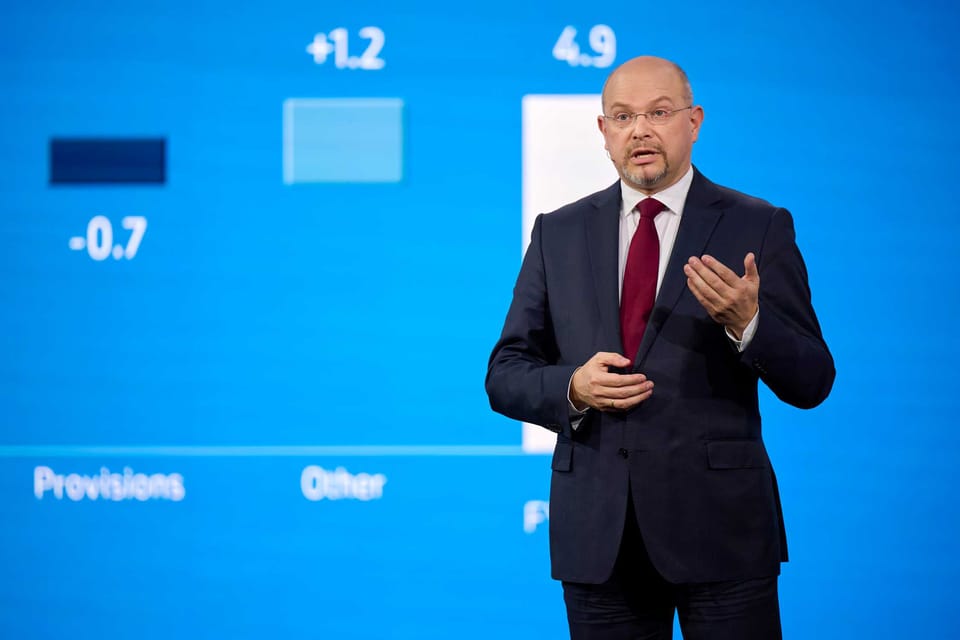
BMW Group used its Capital Market Day on 30 September to put a number on what it expects artificial intelligence to do to its own organization. By the middle of 2027, the carmaker said, it will cut the number of divisions and associated management roles by 20%, with a comparable reduction at the organizational levels below. The release links the move directly to AI: through “the efficient use of artificial intelligence”, BMW aims to become more agile across all departments and corporate levels, which “calls for significantly leaner management structures and a reorganisation of the divisions”.
The cuts sit inside a wider restructuring. BMW said it reached an agreement with its Works Council in July on a significant adjustment to personnel structures. The release lists a voluntary severance program alongside faster, streamlined processes. Milan Nedeljković, chairman of the board of management of BMW AG, said BMW is improving its structures and cost base to meet fiercer competition: “The workforce restructuring programme is an important lever for this.” The financial goal is an earnings before interest and tax (EBIT) margin of 8–10% in the automotive segment by the start of the next decade, with 3–5% as an interim step in 2028.
Walter Mertl, the board member responsible for finance, cast agentic AI as the engine of the change. Consistent use of agentic AI applications across the company, he said in the release, would bring more agile and efficient development, “leaner structures and faster decision-making”.
That is the part UK organizations buying AI should study. The risk with an AI business case built on hours saved per employee is that the savings are hard to bank. BMW has written its case into the org chart. The argument here is that the savings from agentic AI arrive when layers of management come out, and that whether they hold depends on one question: who approves what the agents produce once those layers are gone.
The savings sit in the org chart
BMW presents the AI program and the structural cut as one plan. The questions and answers published with the release list “systematic use of artificial intelligence across the company” next to the 20% reduction in divisions and management roles as concrete measures. They say the margin target rests partly on “leaner organisational structures”.
For a UK CIO, the lesson is about where to look for returns. An agent that drafts a requirement or checks a test result saves an engineer some time. The larger saving, on the argument here, would come from needing fewer people whose job is to coordinate, review and pass work up a chain. The risk is that this case is harder to make and harder to reverse, because the management layer being removed is also where judgment and accountability used to sit.
The sign-off BMW kept
The detail worth copying is in the vehicle development section. BMW says it will move AI “from individual applications to core vehicle development processes”, with agentic AI expected to provide end-to-end support “from the initial technical requirements to testing and release”. Specialized digital agents are being connected to development data and IT systems built up over decades. Then comes the line that carries the governance model: “The results are consistently monitored, reviewed and finally approved by the developers.”
That sentence settles who is accountable before the savings are counted. Agents do the work; developers approve it. It also points to a capacity question the release does not answer. If divisions and management roles shrink by a fifth while agents produce more output, the people giving final approval carry more of the load. The release does not say how that review work will be measured or staffed.
Production shows how far BMW is prepared to go elsewhere. It says digital AI agents in its plants “will increasingly perform challenging tasks autonomously in a continuous learning process”. Autonomy on the factory floor and human approval in development are two different settings, and BMW describes them differently by domain. Buyers should expect to make the same choice process by process rather than once for the whole organization.
The data behind the agents
The other half of BMW’s plan is data it already holds. The 30 September release cites its work with AI company Mistral AI on crash simulations as an example. When the partnership was announced on 28 May, BMW said it runs thousands of virtual crash simulations each week and has built up a historical dataset of more than one petabyte of crash simulation data. It calls the approach Large Industry Models (LIMs): AI systems trained on “industry specific engineering and simulation data”. Dr Franz Decker, BMW’s CIO and senior vice-president, said at the time: “For the BMW Group, the use of industrial data is a key factor in translating artificial intelligence into value creation.”
For UK organizations this may be the more useful half of the story. The case for starting there is that general-purpose models are open to any competitor that pays for them, while years of proprietary engineering, operational or customer data are not. The organizations most likely to see structural savings from agents may be those whose agents can work on data specific to their own processes, with people who know that data doing the approving.
UK buyers drafting agentic AI plans should take three steps from BMW’s release. Name who approves agent output in each process before any headcount saving is booked. Size the review work that approval creates, because fewer managers and more agent output put the weight on the approvers. And start where the organization’s own data is deepest. BMW has put a figure on the management cut. The harder number, which its release does not give, is how much more each developer will be asked to sign off.

Get The VETTDD BriefingThe week in the technology channel, every week.
Subscribe freeSources
- BMW Group, “Agility, efficiency, AI-based innovations: BMW Group sets course for greater profitability and resilience”, press release, 30 September 2026. https://www.press.bmwgroup.com/global/article/detail/T0461229EN?language=en
- BMW Group, “BMW Group and Mistral AI advance AI in crash simulation”, press release, 28 May 2026. https://www.press.bmwgroup.com/global/article/detail/T0458125EN/bmw-group-and-mistral-ai-advance-ai-in-crash-simulation?language=en