
Openreach makes copper exits free and tests a £2,200 fiber price
Around half a million business lines are still on the analog network as line rental prices rise and the January 2027 switch-off nears. A new trial asks what firms beyond the fiber map should pay
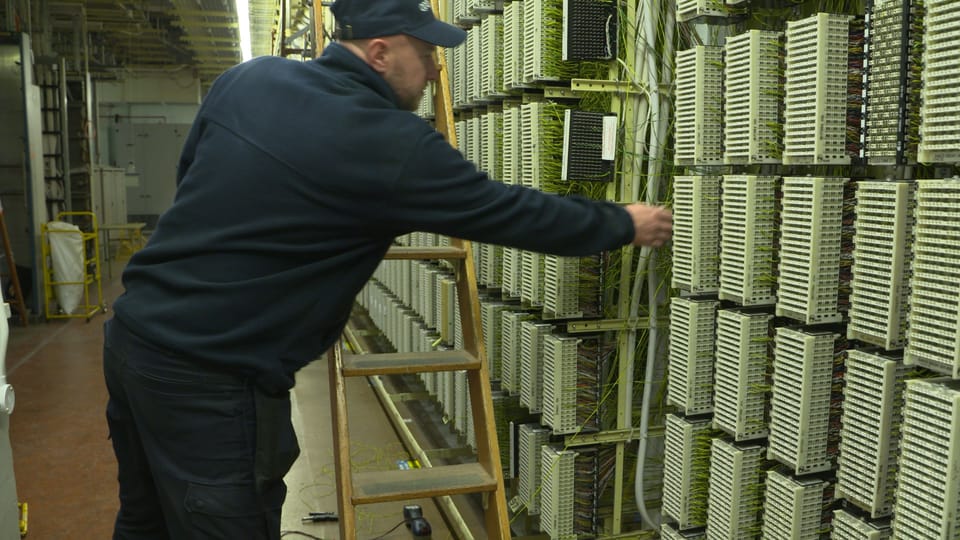
- Voice-only legacy lines can move for free between 8 June and 31 October 2026, and a standalone broadband offer now runs to the same date.
- The near-net trial offers fiber builds at a fixed £2,200 to more than 200,000 listed business and public sector premises, but only 400 orders in total.
- Businesses on old lines should press their provider for a migration date before WLR prices rise again on 1 July and 1 October.
Openreach has removed one of the last cost excuses for keeping a business on the analog phone network. In a briefing to communications providers on 8 May, it said migrations from voice-only Wholesale Line Rental (WLR) lines to fully unbundled lines, or to its data-only copper broadband product, will be free for orders placed between 8 June and 31 October 2026. It also extended a special offer for moving WLR lines to standalone broadband lines from 30 June to 31 October.
The timing is not subtle. BT will retire the public switched telephone network (PSTN) by 31 January 2027, and Openreach is raising WLR prices in steps until the cost of a legacy line has doubled compared with 2025. A week earlier, Openreach also put a fixed price on building full fiber to business premises that sit outside its rollout plans.
Taken together, the two moves change the arithmetic for small businesses on old lines and for the providers that serve them. The question for those firms is no longer whether to move, but whether their provider will move them before the price rises and the deadline do it for them.
A deadline with a price attached
Openreach’s own figures show how much work is left. In February, it said roughly 2.8 million lines were still on the PSTN, more than half a million of them serving business premises. Its published schedule raised WLR prices by 20% from 1 April, with further 40% increases due on 1 July and 1 October. By 8 May, about 2.4 million lines still needed to move, around half a million of them business lines, according to ISPreview, which put the current rate of reduction at about 44,000 lines a week.
On those figures, clearing 2.4 million lines at 44,000 a week would take about 55 weeks, while only about 38 weeks remain between 8 May and the 31 January deadline. That gap is why the free migration offer matters. Under the 8 May terms, providers pay the normal connection charge and receive a full rebate afterwards, as long as the order is placed in the offer window and completes within 30 days of its end. The offer does not cover Openreach’s analog-compatible copper product, and Openreach reserves the right to withdraw or change it.
Openreach has also been plain about where the risk sits. In its February announcement it said many providers had already migrated much of their base, but “a number of smaller or specialist providers have been slower to act”. James Lilley, director of all-IP at Openreach, said then: “If your provider hasn’t contacted you, you need to ask why.” Card machines, alarms, lift lines and CCTV links all appear on the company’s list of equipment that will need to move.
For a small business, the practical effect of the 8 May briefing is that, from 8 June to the end of October, its provider has no wholesale connection charge to pass on for moving a voice-only line. A provider still selling WLR after that is choosing to carry a line that costs more each quarter and stops working in January.
Fiber for the premises left out
The second announcement is the more interesting test. On 1 May, Openreach set out a 12-month near-net trial, running from 1 June 2026 to 31 May 2027, to see whether it can build full fiber to the premises (FTTP) for business locations outside its build plans on a reactive basis. A pre-selected list of more than 200,000 business and public sector premises, identified by Unique Property Reference Number, will be eligible. Single-dwelling units come first, and Openreach intends to add multiple-occupancy units after a few months.
The price is the point. Providers pay a fixed build charge of £2,200 excluding VAT, due when the build is complete, on top of the normal connection and rental charges for a 1Gbps service with 115Mbps upload, or faster. Orders depend on a desk survey confirming the premises qualifies for fixed-price treatment, and quotes are valid for three months.
Supply is tight. The whole industry is capped at 400 premises orders, on a first-come, first-served basis, and no single provider can place more than 100. Openreach said, in comments reported by ISPreview on 6 May, that the trial will be used to set the details of a final product, if it decides to proceed with one, and that its aim is a simpler process with greater price certainty up front.
That certainty is what business buyers have lacked. Openreach’s older fiber-on-demand product often ended up costing many thousands of pounds to install, ISPreview notes, and few providers ever offered it. A known £2,200 charge does not suit every business, but it is a figure a finance director can approve, set against the cost of a leased line or of waiting for a subsidized rollout that may not come.
What the other side says
The government wants more of this. In the Statement of Strategic Priorities designated on 27 April, it told Ofcom to ensure that businesses across the country, “including those in rural areas”, can get the fast, reliable and resilient broadband they need, and to treat a healthy business connectivity market as a priority. The same statement says more than 87% of UK premises can get a gigabit-capable connection, and sets a goal of 99% by 2032.
Not everyone thinks the regulatory settlement helps the premises left out. Colin Hutchinson, group managing director and CFO of Fibrus, an alternative network in Northern Ireland and Cumbria, told ISPreview on 5 May that the outcome of Ofcom’s Telecoms Access Review “all but kills the prospect of future private investment in many rural areas”. The statement also asks Ofcom to monitor Openreach’s commercial terms closely while competition develops. A fixed-price build offer aimed at businesses outside current plans is the kind of term rivals are likely to watch.
The trial is also small. With 400 orders across the industry, it will reach a fraction of the 200,000-plus premises on the list. Its value to business customers lies less in this year’s builds than in the precedent: a fixed, published build price for premises outside Openreach’s plans.
What business customers should do
Any business still paying for a WLR line should ask its provider three questions now: when the line will move, what it will cost after the 1 July and 1 October price rises, and which connected equipment, from card terminals to alarms, has been tested on a digital line. Providers have until 31 October to use the free migrations and the extended broadband offer. After that, the cost of waiting falls on the customer.
Businesses outside the fiber footprint should ask whether their premises is on the near-net list and whether their provider has signed the trial contract. With orders capped at 100 per provider, the providers that sign early and bring qualified sites will take most of the places.
For telecoms providers serving SMEs, the message is simpler still. Openreach has priced both the exit from copper and the route into fiber. The providers that stall now will be selling their customers the most expensive line on the network in its final months.

Get The VETTDD BriefingThe week in the technology channel, every week.
Subscribe freeSources
- Openreach, “WLR007/26 WLR Solus to MPF or SOTAP migration offer and WLR to SOGEA migration offer extension”, briefing, 8 May 2026. https://www.openreach.co.uk/cpportal/updates/briefings/wholesale-line-rental/wlr00726
- Openreach, “NGA2008/26 Near-net Trial”, briefing, 1 May 2026. https://www.openreach.co.uk/cpportal/updates/briefings/ultrafast/nga200826
- Openreach, “Time for a ‘big switch-up’ as PSTN switch-off looms”, press release, 5 February 2026. https://www.openreach.com/news/time-for-a-big-switch-up-as-pstn-switch-off-looms/
- Department for Science, Innovation and Technology, “Statement of Strategic Priorities for telecommunications, the management of radio spectrum, and postal services”, designated 27 April 2026 (page updated 30 April 2026). https://www.gov.uk/government/publications/statement-of-strategic-priorities-for-telecommunications-the-management-of-radio-spectrum-and-postal-services/statement-of-strategic-priorities-for-telecommunications-the-management-of-radio-spectrum-and-postal-services
- ISPreview, “Openreach Near-net FTTP Trial to Reach UK Businesses Outside Build Plan”, 1 May 2026, updated 6 May 2026. https://www.ispreview.co.uk/index.php/2026/05/openreach-near-tem-fttp-trial-to-reach-uk-businesses-outside-build-plan.html
- ISPreview, “Openreach Offers Free PSTN Migrations for Voice Only UK Phone Lines”, 8 May 2026. https://www.ispreview.co.uk/index.php/2026/05/openreach-offers-free-pstn-migrations-for-voice-only-uk-phone-lines.html
- ISPreview, “Fibrus MD Warns Ofcom May Have Killed Private Investment in Rural UK Broadband”, interview, 5 May 2026. https://www.ispreview.co.uk/index.php/2026/05/fibrus-md-warns-ofcom-may-have-killed-private-investment-in-rural-uk-broadband.html
Everflow’s £44m raise tests whether SMEs want broadband with their water

Openreach trims leased line costs as business fiber rivals spread

Business broadband switching gets cheaper but still lacks a live date