

Anne Boden plans Lockwood, a current account for AI agents
Starling’s founder has set out how Lockwood would let customers’ AI agents pay within limits they set. But what happens when an agent with genuine permission makes the wrong decision, a question she raises herself, is still open

On 14 November Anne Boden, who founded Starling Bank, unveiled Lockwood, a current account built for customers’ AI agents. She set out the plan in The Sunday Times under the headline “Why I’m building my second bank in a decade” and published three essays on Lockwood’s website the same day. Lockwood is not yet open and is taking names for a waitlist.
Lockwood describes the product as a current account that lets an agent pay “within limits you set, for people and small businesses in the UK”. Everyday payments would go through inside the customer’s spending limits, and anything bigger would wait for a tap from the customer. Customers could switch any assistant off at any time, and Lockwood’s own AI would check each one’s identity.
The company behind it, Lockwood AI Limited, was incorporated in June 2025 as AI For H Ltd and took its new name on 13 November, Companies House records show. Boden is its sole director. Every page of the site carries the line “Lockwood is not a bank.”
“When I founded Starling in 2014, we pioneered the shift to smartphones becoming the customer’s main bank branch,” Boden wrote in the essay “The right time to start again”. Agents now act for customers, and she argues that today’s banks, Starling among them, are not ready for them: “Existing banks, including the first generation of neobanks, are not prepared for agentic commerce because they were built on the assumption that a human is the principal user.”
The case for starting again
Boden accepts that existing neobanks can add agent features, as traditional banks eventually built good mobile apps. Supporting agents properly, she wrote, “requires a bank to be able to identify each agent, understand who it represents, enforce a bounded mandate and retain evidence of every decision”. Retrofitting that across existing customer journeys would be, in her words, “a substantial undertaking”.
A mandate, in Boden’s usage, is the set of permissions a customer gives one agent: which account it may draw on, for what purpose, how often and for how long. In her second essay, “AI agents need a different type of bank”, she describes one control center listing every agent with access to a customer’s money, each revocable on its own.
The account would record what the customer authorized, what the agent requested and when a payment was refused or referred back. Lockwood’s home page shows how limits might work, with amounts it labels as examples: an agent with a £100 limit pays a phone bill and train tickets by itself and holds a weekly shop and a boiler repair for the customer’s approval.
In her third essay, “Unravelling the new economics of attacking a bank”, Boden describes every agent request passing through one control layer, where the agent must show who it is, who runs it, which customer it acts for and what authority it holds. The account would then check whether that agent was authorized to make the request. A stolen agent credential could be switched off and the customer’s card left in use.
Built and run by agents
Building Starling took significant teams of engineers, Boden wrote, and agents can now help write, test and document that kind of code. She expects a bank built this way to need “a smaller, highly experienced team, who oversee the development of its own technology”. By its own account, agents do much of the work of building and running Lockwood. It gives no headcount.
Mistakes made with permission
In Boden’s example, a household agent asked to top up the sock drawer pays with a stored card, and 20 pairs arrive when the customer wanted two. Nothing is stolen and every system works as designed. She calls it one of the biggest unanswered questions in agentic commerce: “what happens when an AI agent has genuine permission to use your money but the wrong decision is made?”
An agent “may remain within its financial limit while acting completely outside the customer’s intentions”, Boden wrote, and by the time a payment reaches the bank much of the decision has been made elsewhere. Her remedy is the record of each request: “Resolving any mistakes becomes extremely difficult without evidence.” The essays do not say who bears the cost when an agent acting inside its mandate buys the wrong thing: the customer, the company that runs the agent or the account provider.
The agents themselves sit outside Lockwood. Its site says AI assistants “are made by other companies and work under their own terms”.
Boden has set out what Lockwood is meant to do: let customers’ agents pay inside their mandates, hold larger payments for approval, log every request and let any agent be switched off. Her essays leave open who bears the cost of a wrong decision made with genuine permission.


Get The VETTDD BriefingThe week in B2B technology, every week.
Subscribe freeSources
- The Sunday Times, “Why I’m building my second bank in a decade”, article by Anne Boden, 14 November 2026. https://www.thetimes.com/article/a014aa31-7055-402d-adb4-f8a0a85481d0
- Lockwood, “Banking is changing. Lockwood is built for what’s coming.”, home page, accessed 16 November 2026. https://lockwood.money/
- Lockwood, “The right time to start again”, essay by Anne Boden, 14 November 2026. https://lockwood.money/thinking/the-right-time-to-start-again
- Lockwood, “AI agents need a different type of bank”, essay by Anne Boden, 14 November 2026. https://lockwood.money/thinking/ai-agents-need-a-different-type-of-bank
- Lockwood, “Unravelling the new economics of attacking a bank”, essay by Anne Boden, 14 November 2026. https://lockwood.money/thinking/unravelling-the-new-economics-of-attacking-a-bank
- Companies House, “Lockwood AI Limited, 16500948”, company record, accessed 16 November 2026. https://find-and-update.company-information.service.gov.uk/company/16500948

Editor
The VETTDD editorial desk. Interviews, analysis, columns and news briefs on the decisions shaping B2B technology.
More from Editor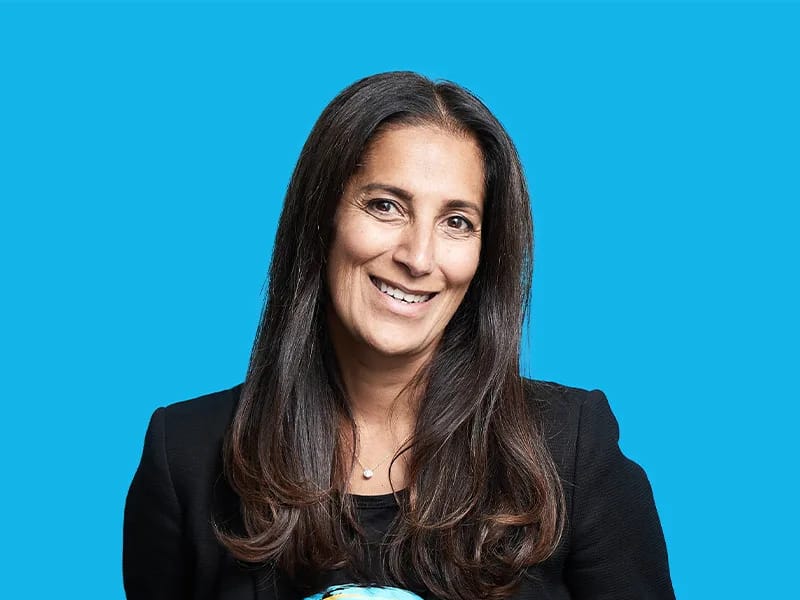

The week in B2B technology, in five minutes
Every week: the interview, the briefs that matter and one view from the editor. Free.