Softcat keeps hiring as it points its AI tools at winning sales
Softcat grew its average workforce by more than a tenth and its wage bill faster still. But its chief executive says the AI and data tools are there to win revenue rather than cut costs
- Wages and salaries rose 16.0% against a 10.8% rise in average headcount, and underlying costs also carried a one-off free share award to every employee.
- Gross profit per average employee rose by roughly 12.5% to about £210,700, on VETTDD’s calculation, helped by fast-growing hardware sales.
- Softcat’s in-house AI agents and its CatNav sales assistant are pitched as ways to sell more, and its results give no figure for jobs automated away.
Softcat, the Marlow-based IT reseller, had an average workforce more than a tenth larger in its latest financial year than in the one before. Results for the 12 months to 31 July 2026, published on 14 October, show average headcount up 10.8% to 2,925. Stripping out Oakland, the data, automation and AI consultancy it bought in April 2025, the rise was 7.7%. Closing headcount was up 9.7%.
Gross invoiced income rose 30.5% to £4.72bn and statutory revenue rose 35.4% to £1.98bn. Gross profit, which Softcat treats as its primary measure of income, rose 24.7% to £616.3m, and underlying operating profit rose 19.4% to £215.1m. Wages and salaries rose 16.0%.
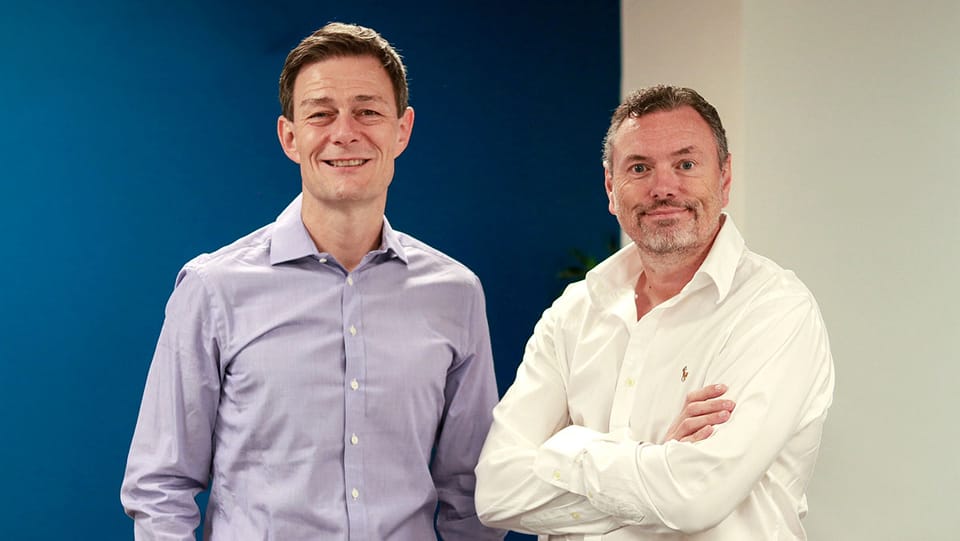
Chief executive Graham Charlton expects the hiring to continue. He told IT Channel Oxygen on the day of the results that Softcat’s headcount will continue to grow at rates similar to those of the past few years. He also stressed that Softcat’s new internal AI and data analytics capabilities are mainly there to grow revenue rather than to cut costs.
Taken together, the results describe an IT reseller that is scaling by adding people, paying each of them more, and using AI to raise what that larger sales and technical force brings in. For chief executives and people directors at smaller tech firms, Softcat’s accounts put numbers on what that choice costs and what it has returned so far.
Pay rose faster than headcount
Wages and salaries grew 16.0% against a 10.8% rise in average headcount, which puts the wage bill per average employee up by about 4.7%, on VETTDD’s calculation. Underlying operating costs also included one-off items: Softcat marked the tenth anniversary of its stock market listing with “a special, one-off, free share award” to all Softcat and Oakland employees, and booked “an overperformance element of variable pay and employee incentives”. Commissions rose in line with commissionable gross profit.
Softcat said it kept its investment in people focused “across technical, specialist and sales support roles”, and it made “significant investment in expanding our internal IT team” alongside corporate development. Underlying operating costs rose 27.7%, ahead of gross profit growth of 24.7%, which is why profit grew more slowly than income.
Softcat’s employee engagement score rose to 91% from 88%, and its employee net promoter score (eNPS) edged up to 56 from 55.
Output per employee rose faster
The extra pay has so far been covered by higher output per head. On VETTDD’s calculation, which backs out last year’s average headcount of about 2,640 from the 10.8% growth rate, gross profit per average employee rose from about £187,200 to about £210,700, an increase of roughly 12.5%. Underlying operating profit per average employee rose by about 7.8%, to roughly £73,500.
Most of that came from selling more to existing customers rather than finding new ones. Customer numbers grew 3.4% to about 10,500, while gross profit per customer rose 20.6% to £58,500. Hardware grew fastest: hardware gross invoiced income rose 41.6%, against 25.3% for software and 30.1% for services. Gross margin slipped to 13.1% from 13.7%, which Softcat puts down to lower-margin client devices, framework-based public sector work and changes to Microsoft fees.
Charlton told the outlet that AI-fueled shortages of kit are the “new normal, certainly across calendar ’27 and probably beyond”. A hardware cycle lifts gross profit per head without any change in how staff work, so part of the 12.5% gain is likely to reflect demand for kit rather than anything the workforce did differently.
AI aimed at sales rather than jobs
Softcat is developing in-house agents across key processes and adopting AI functionality within its enterprise systems. Its sales staff use CatNav, which Softcat describes as “our intuitive in-house assistant designed to help sales teams navigate the breadth of Softcat’s proposition”. The company said AI-enabled tools are “increasing the effectiveness of our go-to-market activity”, and that its systems work will “enable greater automation, better experiences for customers and employees, and improved scalability across the business”.
The results contain no figure for jobs avoided or roles removed through automation. The payoff Softcat describes is more effective selling, while the hiring carries on.
The board expects high single-digit growth in underlying operating profit in the year to July 2027, excluding General Datatech, the US IT solutions provider whose acquisition it announced on 17 September. That is a slower rate than the 19.4% just reported, at a time when Charlton expects headcount to keep growing at a similar rate.
Softcat grew average headcount by 10.8%, or 7.7% without Oakland, raised the wage bill per head by close to 5% and took its gross profit per head up by about 12.5%, with AI tools aimed at getting more sales from each of those people. The gap between output per head and pay per head is what funds the next round of hiring, and a hardware cycle that Softcat does not control has probably done part of the work of keeping it open.

Get The VETTDD BriefingThe week in B2B technology, every week.
Subscribe freeSources
- Softcat plc, “Preliminary Results”, RNS announcement, 14 October 2026. https://www.investegate.co.uk/announcement/rns/softcat--sct/preliminary-results-/9821343
- IT Channel Oxygen, “Softcat CEO on ‘exceptional’ results, renewed Computacenter marketshare contest and ‘new normal’ kit shortages”, 14 October 2026. https://itchanneloxygen.com/softcat-ceo-on-exceptional-results-renewed-computacenter-marketshare-contest-and-new-normal-kit-shortages/
- IT Channel Oxygen, “Softcat ‘shines brightest’ in £99bn market as FY 2026 sales top £4.7bn”, 14 October 2026. https://itchanneloxygen.com/softcat-shines-brightest-in-99bn-market-as-fy-2026-sales-top-4-7bn/

Editor
The VETTDD editorial desk. Interviews, analysis, columns and news briefs on the decisions shaping B2B technology.