

Tesla sells cheaper cars and banks on what drivers pay after the sale
Tesla’s third-quarter profit fell 43% as operating spending rose 39% and regulatory credit income slid. Its shareholder letter now ties future profit to software, services and its own fleet, which changes what a fleet buyer is paying for
Tesla reported its third-quarter results on 21 October. Revenue was flat at $28.0bn (£20.9bn), but net income attributable to shareholders fell 43% to $787m (£587m), from $1.37bn a year earlier. Operating income fell 56% to $718m (£536m), an operating margin of 2.6% against 5.8% in the same quarter of 2025.
Tesla’s own explanation separates revenue from profit. Revenue was held back by lower energy storage sales, a lower average selling price for its vehicles, lower revenue from regulatory credits and fewer deliveries. Operating income was hit by a 39% rise in operating spending, driven by research into what Tesla calls Super Intelligence (SI) and other projects, stock-based pay and selling and administrative costs, and by lower credit revenue and energy storage profit. Deliveries fell 2% to 486,532, and automotive revenue fell 3% to $20.6bn.
Services and other revenue rose 33% to $4.6bn (£3.4bn), and the segment’s gross profit reached a record $734m (£548m), with the growth driven, Tesla says, by charging, insurance and parts sales. Active subscriptions to FSD (Supervised), its driver-assistance software, reached 1.74 million, up from 1.04 million a year earlier.
“Over time, we expect our hardware-related profits to be accompanied by an acceleration of SI, software and fleet-based profits,” the company said in its shareholder letter. For the operations and fleet directors who buy or lease Teslas, the quarter shows a carmaker taking a lower price for the vehicle and planning to earn more of its profit after the handover, through subscriptions, charging and insurance.
A cheaper car in short supply
Tesla ended the quarter with what it calls the largest backlog for its passenger vehicles in four years, and global inventory equal to 11 days of supply. It said battery availability “continued to be the limiting factor in increasing auto volumes in the quarter”, and that it has made progress securing future supply. Record production at Gigafactory Berlin did not lift group deliveries above the level of a year earlier.
A long order book and a supply limit usually hold prices up. Tesla’s average selling price fell anyway, though the letter says a better regional and product mix outweighed it at the operating level, and automotive gross margin excluding regulatory credits rose to 18.1% from 15.4% a year earlier. Tesla is also carrying fewer cars on its own books: the number of new vehicles on operating leases fell 20% in a year, to 133,720.
A subscription approved in nine EU countries
The software Tesla expects to carry more of its future profit is unevenly available. Tesla says more than 75% of new deliveries in North America now include FSD subscriptions, nearly 20 percentage points more than in the previous quarter, and that it believes FSD “is driving demand in markets where it is available”. In Europe the supervised system is available in nine EU countries, after four approvals since the end of the second quarter: Croatia, Slovenia, the Czech Republic and Slovakia. Tesla puts its European use at more than 100,000 customers, who have logged more than 160 million kilometers.
The letter’s footnote states that the system requires active driver supervision and “does not make the vehicle autonomous”. In a company car fleet, that makes it a paid driver aid, not a change to who drives or how many hours they work.
The fleet Tesla wants to run itself
In its outlook, Tesla said deliveries will be affected by demand, supply chain readiness “and allocation decisions between sale to customers and use for our owned and operated fleet”. That fleet is its robotaxi service, which began carrying passengers in Cybercabs in Austin on 3 September and had logged nearly two million unsupervised miles by the end of the quarter.
On the earnings call, Ashok Elluswamy, Tesla’s vice-president of AI software, said the first customer-owned vehicles could join the robotaxi fleet around the second quarter of 2027, according to TechCrunch. The same report notes that the unsupervised version of FSD has slipped again: Elon Musk, the chief executive, said in April it would “probably” arrive in the fourth quarter of 2026.
The allocation line puts Tesla’s own service in the queue for the same constrained battery supply as its customers. Every vehicle Tesla keeps for its fleet is one it does not sell, and the company has said it expects fleet-based profits to grow.
Trucks and chargers for the depot
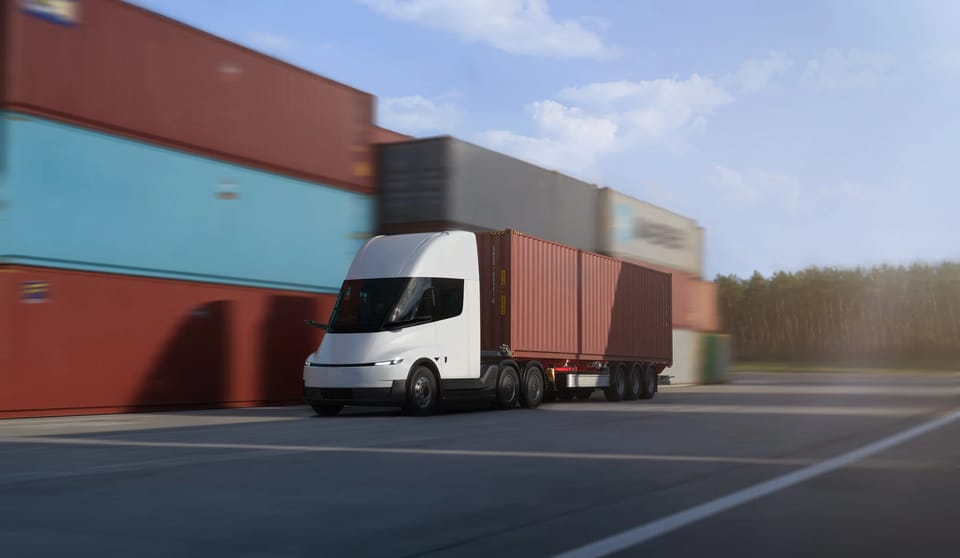
The quarter also brought Tesla closer to commercial fleets. It began volume production of the Semi, its Class 8 heavy-duty truck, on a high-volume line in Nevada, and says the top version covers 500 miles at a gross combination weight of 82,000lb, using 1.7kWh per mile. Tesla claims that is a third of the energy a comparable diesel truck uses to haul the same payload. It deployed its first pre-assembled Megacharger for the Semi, and its Supercharger for Business program, which covers customer-owned charging sites held to Tesla’s performance standards, passed 600 stalls.
For fleet and operations directors, more of the cost of a Tesla is moving from the invoice to the monthly bill, and the supply of new cars now depends in part on how many Tesla decides to keep for itself.


Get The VETTDD BriefingThe week in B2B technology, every week.
Subscribe freeSources
- Tesla, “Q3 2026 Update”, shareholder letter, 21 October 2026. https://assets-ir.tesla.com/tesla-contents/IR/TSLA-Q3-2026-Update.pdf
- TechCrunch, “Tesla starts Optimus robot production in California as profit falls 43%”, 21 October 2026. https://techcrunch.com/2026/10/21/tesla-stars-optimus-robot-production-in-california-as-profit-falls-43/
- European Central Bank, euro foreign exchange reference rates, 21 October 2026. https://www.ecb.europa.eu/stats/eurofxref/eurofxref-daily.xml

Editor
The VETTDD editorial desk. Interviews, analysis, columns and news briefs on the decisions shaping B2B technology.
More from Editor
The week in B2B technology, in five minutes
Every week: the interview, the briefs that matter and one view from the editor. Free.