AI-ready ERP is a slogan until someone unifies the data
Paul Smolinski told Raconteur that fully unified data would make his job at Forterro much easier. UK partners should stop selling AI-ready ERP and start selling the integration work that makes it true

- Forterro’s CFO says the systems and data of a €375m ERP group have fragmented as it grew, which makes fast insight and AI harder to reach.
- Salesforce’s own research found 84% of data leaders need to overhaul their data strategy before AI can succeed, and only 29% of enterprise applications are connected.
- The recurring services revenue sits in data-readiness assessments, master-data cleansing and integration work, priced monthly and sold to the finance director.
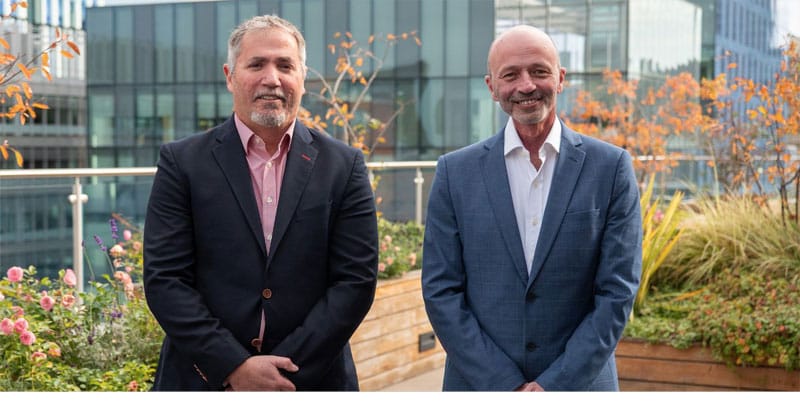
Ask a chief financial officer what single thing would make his job easier and you might expect a bigger team or a better forecasting tool. Paul Smolinski, chief financial officer of Forterro since March 2021, gave a different answer in an interview with Raconteur published on 22 September. “It would be much easier if we had fully unified data across the business,” he told Raconteur.
Consider who is saying it. Forterro is the London-headquartered enterprise resource planning (ERP) group whose software runs Europe’s industrial mid-market. Partners Group has owned it since 2022. Its 2025 results release, published on 11 February, reports revenue of €375m (£321m), recurring revenue at 74% of the total against 50% in 2021, more than 2,500 staff across more than 40 offices and four acquisitions completed in the year: Orgadata, BM Group, TARGIT and Inology. Two more, Klaes and 3E, followed in 2026. Smolinski told Raconteur that revenue has grown by more than two and a half times since he joined, through a mix of organic growth and deals.
He was candid about what that does to a finance function. As companies grow, he told Raconteur, systems and data fragment, and until everything is connected and structured the same way, tools such as AI and quick, clear insight stay out of reach. Forterro already uses AI in reporting and customer support, he said, and is looking at where else it can cut cost or create revenue. The advice he rates above all of it is older than any software: cash is king, plan carefully and never borrow more than you can repay.
Here is what I take from that. If the CFO of a group that sells ERP for a living, and that has bought six companies since the start of 2025, says his own data is not unified, then “AI-ready ERP” is a slogan rather than a product. UK partners who are pitching it should stop. The money is in making the claim true, one customer at a time, and that is integration and data-cleansing work – the least glamorous line on any reseller’s price list and the one that recurs.
The slogan and the survey
Every vendor deck now carries the phrase. Forterro’s own first-half 2026 update, published on 22 July, reports cloud bookings up 61%, recurring revenue at 80% of the total and more than 27,000 industrial businesses. But look at what the company’s customers said when it asked them. In a survey of 430 of its own customers, published on 7 July and to be read as Forterro’s research, 64% called AI a top priority for the next 24 months and 74% expected Forterro either to support or to steer their AI roadmap. Dean Forbes, Forterro’s chief executive, said in the release: “Industrial businesses don’t need another collection of disconnected AI tools bolted on from outside their systems.” A vendor survey is a vendor survey. Treat it as a demand signal rather than a market fact and it still tells you something useful: mid-market manufacturers want somebody else to own the roadmap.
Wider research says the same about the foundations. Salesforce’s State of Data and Analytics study, published on 4 November 2025, surveyed 3,800 analytics and IT decision-makers across 18 countries between June and August 2025. It found that 84% of data and analytics leaders say their data strategy needs a complete overhaul before their AI ambitions can succeed, and that the average enterprise runs 897 applications, of which 29% are connected. Salesforce sells data-integration products, so it has an interest in the answer. Even so, the pattern matches what Smolinski described from inside a €375m software group: growth by acquisition multiplies systems faster than anyone joins them up.
Where the recurring revenue sits
An ERP subscription pays a partner once a year, and the vendor sets the margin. The work that makes AI possible pays every month, and the partner sets the price. Cleansing the customer and product masters. Finding the six part numbers that describe the same component. Connecting the finance system of the subsidiary the customer bought the year before. Building the integration layer and then maintaining it. Every acquisition a customer makes restarts the job. Every AI feature the vendor ships exposes another gap.
So the pitch changes. Instead of “our ERP is AI-ready”, the honest opening is a data-readiness assessment: how many systems hold customer records, how many versions of the truth exist, which fields are empty. Charge for it. Put the findings in front of the finance director, because Smolinski’s answer shows that the finance director feels the fragmentation first, at month-end and in the board pack. Then sell the remediation as a 12-month program with a monthly fee and a defined outcome: one customer master, one product master and a reporting layer that agrees with the general ledger.
What to do before the next renewal
Start with your own book. Pick the 10 largest ERP customers and count their systems. Any that have made an acquisition in the past three years come first, because the integration work is overdue and nobody has priced it. Next, rewrite the discovery script so that the data questions come before the AI demo. A salesperson who asks “how many places does a customer record live?” will find more projects than one who opens the AI slide. Finally, go to the vendor. Forterro’s customers told it they want their software provider to steer the AI roadmap; the same is likely to be true of most ERP vendors in the UK mid-market. Ask what the vendor will fund for the partner who does the unglamorous work that makes its AI claims stand up.
Smolinski will not be the last CFO to say his data is fragmented. He is unusual only in saying it out loud. Nobody’s data is AI-ready, and the partner that admits it first gets paid to fix it.

Get The VETTDD BriefingThe week in the technology channel, every week.
Subscribe free- Raconteur, “CFO on the Spot: Five minutes with Paul Smolinski, Chief Financial Officer of Forterro”, by Rayanne Harmon, 22 September 2026. https://www.raconteur.net/finance/cfo-on-the-spot-five-minutes-with-paul-smolinski-cfo-of-forterro
- Forterro, “Forterro closed 2025 with strong momentum, completing an exceptional financial year”, press release, 11 February 2026. https://www.forterro.com/en/news/forterro-closes-2025-with-strong-momentum
- Forterro, “Forterro Builds Momentum in H1 2026 with Strong Growth, Strategic Expansion and AI Innovation”, press release, 22 July 2026. https://www.forterro.com/en/news/forterro-h1-2026-growth-expansion-ai
- Forterro, “New research reveals industrial companies’ appetite for AI that proves its value”, press release, 7 July 2026. https://www.forterro.com/en/news/industrial-businesses-want-ai-that-proves-its-value
- Forterro, “Forterro to Acquire 3E, Expanding Mid-Market Software”, press release, 18 May 2026. https://www.forterro.com/en/news/forterro-acquires-3e-mid-market-manufacturing-software
- Forterro, investors page (ownership, headcount, offices, customers). https://www.forterro.com/en/investors
- Forterro, Paul Smolinski leadership profile (tenure from March 2021). https://www.forterro.com/en/people/paul-smolinski
- Salesforce, “Study: 84% of Technical Leaders Need Data Overhaul for AI Strategies to Succeed”, State of Data and Analytics, 4 November 2025. https://www.salesforce.com/news/stories/data-analytics-trends-2026/