

Lloyds launches a £50 AI document check for exporters
Export Assist, launched on 11 November and built on Complidata’s TradeSpeed platform, checks letter of credit paperwork before it reaches a bank. Fiamma Morton, managing director of SME banking, has opened it to exporters that bank elsewhere
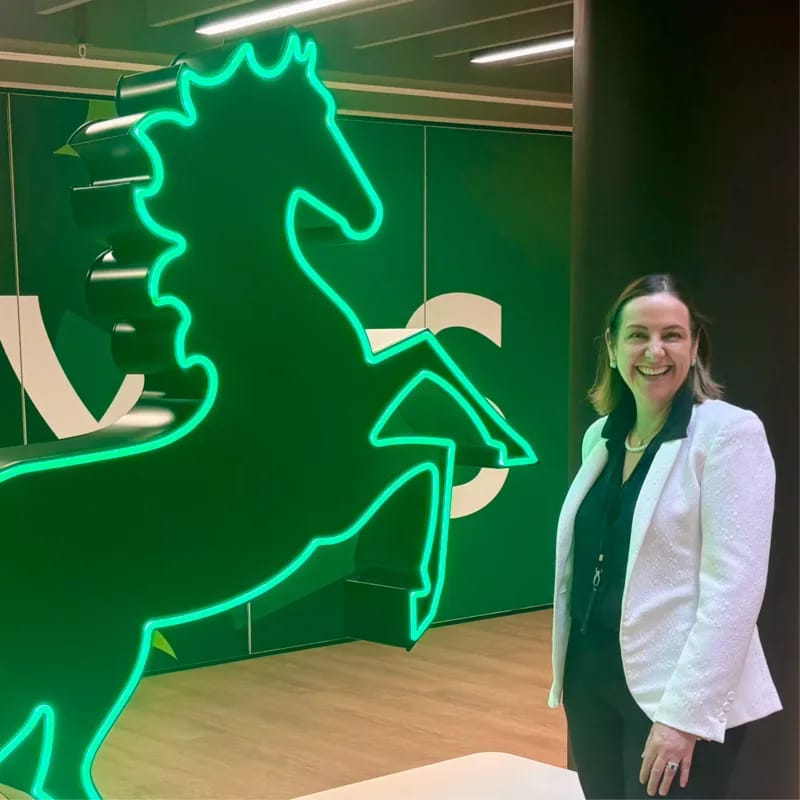
Lloyds launched Export Assist on 11 November, the bank’s first AI tool for exporters. It reads the documents an exporter plans to present under a letter of credit and flags likely errors before they reach a bank. Each use costs £50, according to the notes to the bank’s announcement.
Fiamma Morton, managing director of SME banking at Lloyds, said the service is open to exporters that hold their accounts with other banks. “AI has enormous potential when it solves real, everyday problems,” Morton said in the announcement. “Export Assist is about putting that technology to work for British businesses, helping them identify potential paperwork issues earlier and giving them more time and confidence to pursue opportunities overseas.”
A letter of credit gives an exporter greater certainty of payment on an overseas sale. The bank handling it examines the commercial invoices, transport documents, insurance documents, certificates of origin and packing lists the exporter presents, then decides whether to pay.
The cost of rejected paperwork
Lloyds takes the refusal rate from a briefing the International Chamber of Commerce (ICC) Banking Commission published on 27 June 2022, an estimate of documents refused on first presentation worldwide. The paper lists expiry, shipment and presentation periods among the more common faults, along with conflicting data between documents, missing documents and incorrect endorsements.
The ICC paper says discrepancy fees were introduced to cover a bank’s extra work on a faulty presentation and that the charge is “now, perhaps, being abused in some cases”. Lloyds puts those fees at £60 to £100 each. Resolving a discrepancy can take weeks and holds up payment, the bank said.
Lloyds estimates that delays and resubmissions cost exporters 500,000 days a year. The bank calculated the figure itself, multiplying the number of letters of credit it believes the industry receives by the average delay. It sized the market from its annual export letter of credit volume and its estimated market share, and published none of those inputs.
How the service works
Export Assist carries no upfront cost, subscription or long-term contract. The product page says an exporter could get some or all of the charge back by managing the transaction through Lloyds, and that presentations routed through the bank get a reduced price, which it does not state.
The platform accepts presentations under letters of credit from any bank. Several people from one company can use the same account.
An exporter uploads its documents, runs the review, works through the points the system highlights and submits the final set. A dashboard holds every letter of credit the company is working on and generates the cover letter that goes to the bank. Exporters register by email, and a Lloyds trade specialist takes them through onboarding.
Built on TradeSpeed
The checks run on TradeSpeed, the platform of Complidata, a company of more than 25 people with headquarters in Brussels and London. Its chief executive, Ben Arber, spent more than 25 years at HSBC, where he was head of trade finance in Canada. Gary Collyer, who heads TradeSpeed, chaired the groups that drafted UCP 600, the ICC rulebook for documentary credits.
Computer vision and large language models fine-tuned with trade expertise extract the data from each document, according to Lloyds’ page. Prompt engineering and a rules-based system compare each document with the terms of the credit, UCP 600 and the ISBP 821 guidance on examining documents, and explain any discrepancy. Agentic AI handles what the bank calls “the most difficult challenges”.
TradeSpeed is deployed on Google’s private cloud. Lloyds says neither Complidata nor Google has access to customers’ data, that every action is recorded in an automated audit trail and that the platform holds SOC 2 certification. Each customer runs on an isolated setup, and customers’ documents are not used to train models anyone else touches, according to Complidata’s exporter page.
“This enables exporters to save time and money while getting paid faster,” Arber said. Complidata sells a TradeSpeed pre-check to exporters directly, through a demo request and with no published price. In June 2026 it formed an advisory board chaired by Ian Tandy, a former co-head of global trade solutions for Asia Pacific at HSBC.
Early users
Halspan, a Scottish-based supplier of door blanks, cores and intumescent seals, was among the first businesses to use the tool. It exports to markets including India and the Middle East and has a technical support office in Dubai. “The platform thoroughly checked our documentation and highlighted things that may have been overlooked,” said Ruth Robertson, export manager at Halspan.
The product page carries a second testimonial, from an unnamed letter of credit manager at a recycling company, who reported being “impressed by the speed of the checks and the high level of accuracy”.
Lloyds states that Export Assist cannot guarantee a bank will accept a presentation or make payment. The exporter’s bank still examines the documents and makes that decision, according to Complidata.
The platform does not currently check against eUCP version 2.1, the ICC’s rules for electronic presentations. Lloyds’ page says “extra care may be needed” where a letter of credit is subject to them.


Get The VETTDD BriefingThe week in B2B technology, every week.
Subscribe freeSources
- Lloyds, “AI tool aims to recover up to half a million trading days lost by UK exporters every year”, press release, 11 November 2026. https://www.lloydsbankinggroup.com/media/press-releases/2026/lloyds/ai-tool-to-recover-trading-days-uk-exporters.html
- Lloyds, press release with notes to editors (PDF), 11 November 2026. https://www.lloydsbankinggroup.com/assets/pdfs/media/press-releases/2026-press-releases/lloyds/ai-tool-to-recover-trading-days-uk-exporters.pdf
- Lloyds, “Export Assist for Letters of Credit”, product page, read on 11 November 2026. https://www.lloydsbank.com/business/international/importing-and-exporting/exporting/export-assist-for-letters-of-credit.html
- ICC Banking Commission, “Technical Advisory Briefing No. 3: Reducing discrepancy rates under Documentary Credits”, 27 June 2022. https://library.iccwbo.org/content/tfb/BRIEFINGS/20220627_TA_Briefing_No3_reducing_discrepancy_rates.pdf
- Complidata, “Letter of credit pre-check for exporters”, product page, read on 11 November 2026. https://www.complidata.io/exporters
- Complidata, “About us”, read on 11 November 2026. https://www.complidata.io/about-us
- Halspan, “About us”, read on 11 November 2026. https://www.halspan.com/about-us/

Editor
The VETTDD editorial desk. Interviews, analysis, columns and news briefs on the decisions shaping B2B technology.
More from Editor


The week in B2B technology, in five minutes
Every week: the interview, the briefs that matter and one view from the editor. Free.