

OpenAI launches ChatGPT Wallet to let its agents pay online
OpenAI’s agents can now pay at an online store’s existing checkout with a card token from Visa, Mastercard or American Express. But the company says bot defenses and fraud checks may turn those buyers away
OpenAI launched ChatGPT Wallet on 13 November, giving its dots agents a way to pay for what they find. A user saves a card once. When the dot reaches a checkout, the user reviews the items, the total and the card, then approves the purchase with a check such as Face ID or a fingerprint scan. OpenAI built the wallet with American Express, Mastercard and Visa.
The store never receives the card number. After approval the card network issues a payment token with its own number, security code and expiry date, and the charge goes to the card the user chose. OpenAI’s guide for businesses, published alongside the launch, says the wallet works with existing checkout pages and payment forms and that no Wallet-specific integration is required.
Availability is narrow. The wallet is open to ChatGPT Pro subscribers aged 18 and over in the US who hold eligible US-issued cards, and it runs only through dots. OpenAI’s help center says dots are rolling out to Pro users in markets excluding the European Economic Area, Switzerland and the UK, so nobody in the UK can pay with it yet. The guide for businesses sets no rule on where the seller is based.
OpenAI says users transact directly with businesses, which keep the customer relationship and control of pricing, fulfillment, returns and customer service. The business makes the fraud decision too, and the guide tells it not to reuse or save the token for a separate purchase. OpenAI is taking no cut of purchases to start, CNBC reported.
The blocking problem
OpenAI says some sites may block purchases by its agents without meaning to. A dot shops through a browser running on a computer in the cloud, which reads pages, clicks buttons and fills in forms for the user. Stores’ risk systems are often tuned to detect bots from signals such as IP addresses and browser details, the guide says, and the cloud browser can set them off by accident and cause a purchase to fail.
OpenAI is starting to relay details about the person behind the agent to the store in an HTTP header: the country estimated from their IP address, their locale, their time zone and their browser or app. A store’s fraud system, or its provider’s, has to be configured to read those signals, and OpenAI says what a site receives may vary while support rolls out.
OpenAI named the companies it is working with so that agent purchases are recognized as legitimate: fraud prevention firms Forter, Riskified, Sardine and Signifyd, and payment providers Adyen, Checkout.com and Stripe. Akamai, Cloudflare, HUMAN and Vercel verify the signed requests from ChatGPT’s browser automatically. Sites on other providers have to check those signatures themselves.
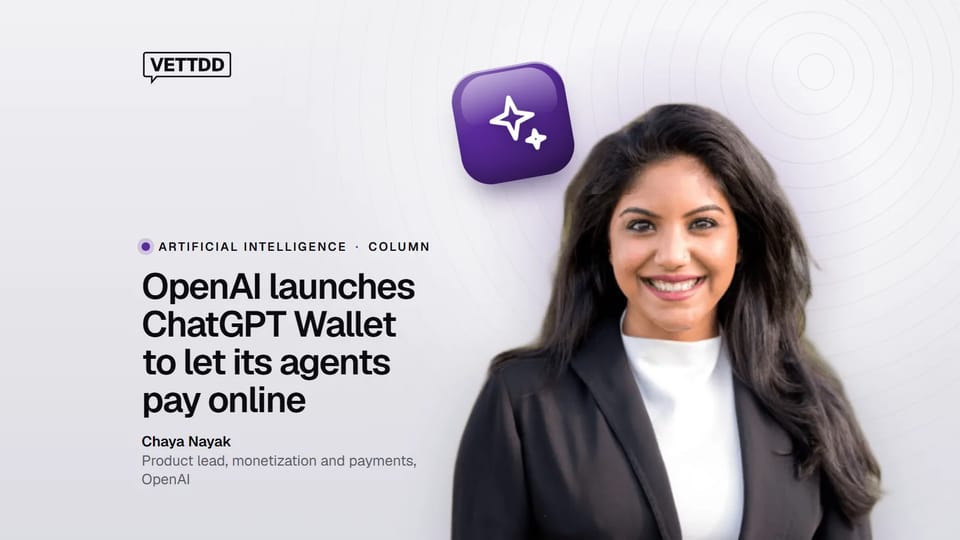
Some companies turn agents away by choice. United Airlines said on 11 November that it will block agents from the systems it uses to book tickets, and Amazon prevents them from buying on its platform, CNBC reported. Chaya Nayak, who leads product for monetization and payments at OpenAI, told CNBC it will take time for sites to build what agent purchases need. “Really, who we are speaking to here is the networks and the merchants,” she said.
The card networks’ view
Executives from the card networks spoke in OpenAI’s announcement about trust and an early phase. Rubail Birwadker, head of global growth at Visa, said: “To deliver on the promise of agentic commerce, consumers, businesses and banks all need to trust the process.” Luke Gebb, executive vice-president and head of global innovation at American Express, called the wallet the first American Express Agentic Commerce Experiences integration and said: “We’re excited to learn together from this early phase and build toward bringing these experiences to more Card Members over time.”
Gebb told CNBC the limited rollout is intentional. OpenAI says banks and networks bring their expertise to evaluating transactions, and cardholders keep their rewards and their protections in eligible disputes, such as a defective item.
Delegated purchases
OpenAI expects to loosen the approval step. Over time, it says, users should be able to hand purchases to their agent entirely, setting spending limits, purchase categories or time periods and pre-approving what falls inside them, with what it calls enhanced safeguards. It gave no date.
Today a person approves every Wallet payment before the network issues the token. A pre-approved purchase would arrive with nobody confirming it at the moment of sale. The guide for businesses says site owners cannot yet set their own rule requiring a person to confirm a checkout, and that OpenAI requires human review before any consequential action for every user. The guide does not say how that requirement will apply once purchases are delegated.
OpenAI has fixed how the money moves: a saved card, an approval for each purchase and a network token handed to the store’s own checkout. It has yet to say when the wallet will reach customers outside the US or whether it will take a share of sales later, and it has told businesses that their own defenses may stop its agents at the door.


Get The VETTDD BriefingThe week in B2B technology, every week.
Subscribe freeSources
- OpenAI, “Introducing ChatGPT Wallet”, company announcement, 13 November 2026. https://openai.com/index/introducing-chatgpt-wallet/
- OpenAI Developers, “Accept payments”, Commerce Partner Playbook, read on 13 November 2026. https://developers.openai.com/commerce/guides/accept-payments
- OpenAI Developers, “Help ensure cloud browser access to your site”, Commerce Partner Playbook, read on 13 November 2026. https://developers.openai.com/commerce/agent-access
- OpenAI Help Center, “Getting started with your dot”, updated 11 November 2026. https://help.openai.com/en/articles/20001530-getting-started-with-your-dot
- CNBC, “OpenAI launches ChatGPT Wallet, allowing its ‘dots’ AI agents to make purchases for users”, Ashley Capoot, 13 November 2026. https://www.cnbc.com/2026/11/13/openai-chatgpt-wallet-dot-purchases.html

Editor
The VETTDD editorial desk. Interviews, analysis, columns and news briefs on the decisions shaping B2B technology.
More from Editor



The week in B2B technology, in five minutes
Every week: the interview, the briefs that matter and one view from the editor. Free.