

SAP built its first system at ICI in 1972 and would not cut the price
Five former IBM employees wrote SAP’s first system at the data center of ICI’s German subsidiary and, by Hasso Plattner’s account, set out to build software for more than one customer. By 1974 SAP had 40 reference customers
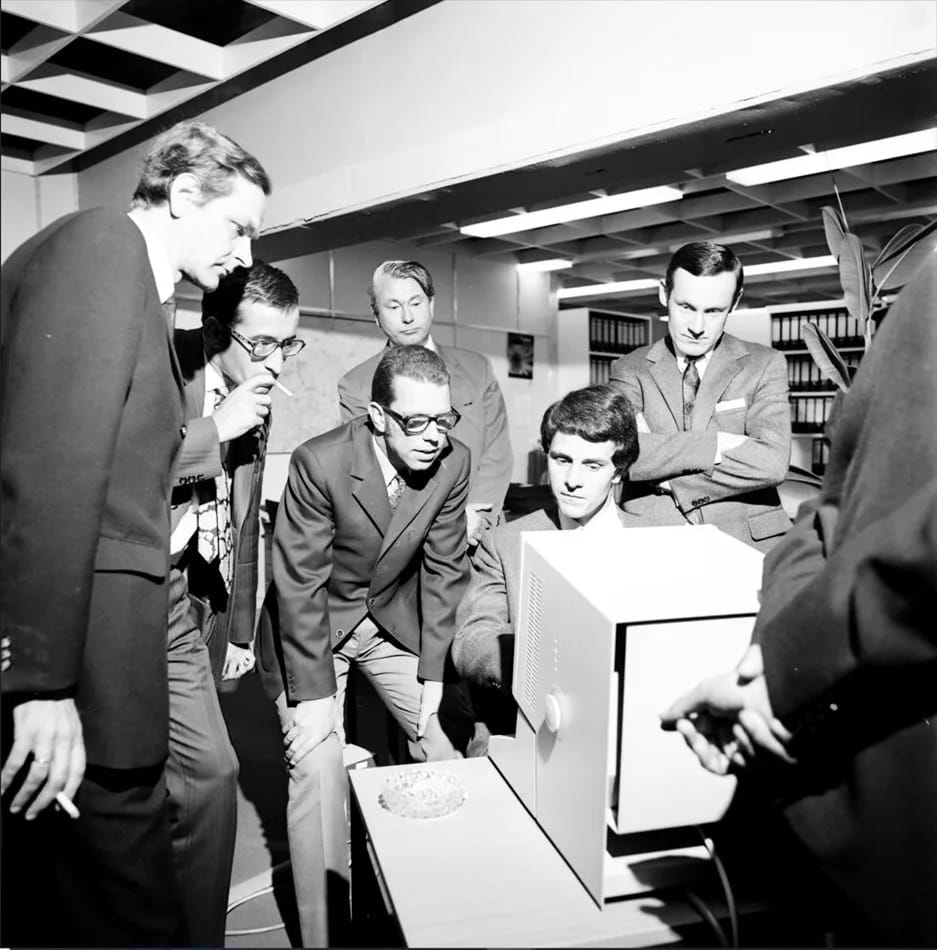
On 1 April 1972, five former IBM employees – Dietmar Hopp, Hasso Plattner, Claus Wellenreuther, Klaus Tschira and Hans-Werner Hector – founded a private partnership called Systemanalyse Programmentwicklung, or “system analysis program development”. SAP’s company history records a headquarters in Weinheim and an office in nearby Mannheim, but says the founders spent most of their time a few miles away, at the data center run by their first customer, the German subsidiary of Imperial Chemical Industries (ICI).
In his oral history for the Computer History Museum, recorded in April 2012 and edited by SAP Global Communications before publication, Plattner said the work began inside IBM, which then offered free consultancy and had Hopp as its lead consultant to ICI. The client was a fiber manufacturer selling variations of the same polyester fiber across 50 different types of orders. “We built a system in nine months,” Plattner said, calling it “what was in those days the first real time online sales system”.
ICI then asked for more than a sales system. Hopp and Plattner asked IBM to develop it as an IBM product and were told, in Plattner’s account: “No, no, no. Product development is done somewhere else. We are a field organization here.” A request to set up their own group in Mannheim was also refused. “Twenty-four hours later we said, ‘Okay, then we leave,’” he said. The aim was wider than one contract: “We wanted to build an application that could handle more than one customer.”
SAP’s first system was therefore a client project, built on the client’s premises, paid for by the client and priced by founders who, by Plattner’s account, would not lower the fee when the client’s board objected. What separated it from ordinary contract work was the founders’ aim of software for more than one customer, and SAP’s own history shows how quickly other customers followed: after two and a half years in business, the company had 40 reference customers.
Desks in the customer’s building
“They were, basically nurturing SAP. We were living there. We got our desks there. We ate in their cafeterias,” Plattner said of ICI. He called the system built there “a prototype for standard software that we would build in the future”. Because the client was multinational and multi-site, the founders had to handle several languages and currencies from the start, which Plattner said gave them “a huge head start in dealing with other international companies”. He described ICI as “in those days the largest chemical company in the world”.
Toward the end of 1972 the founders and two employees completed a materials, information and accounting system known as MIAS, according to SAP. The company lists the nylon factory belonging to ICI in Östringen among its early customers. Development and testing ran on customers’ mainframes at night and at weekends, when no one else was using them. Even after SAP moved its headquarters to rented office space in a bank in Walldorf in 1977, the bulk of development stayed at customer data centers, and its first computer, a Siemens 7738 mainframe, came only in 1978.
The price that stayed
After reviewing SAP’s contract proposal, Plattner said, ICI’s local board and a representative of Manchester who oversaw the European subsidiaries called him and Hopp in and told them they would not sign because the price was too high. The two left the room and agreed: “Mm-mm, the price stays.” “We went back in and said, ‘No, that’s it,’” Plattner said. “And he took the pen and signed. ‘We were just kidding,’ they said.”
“We were profitable in the first year,” he said. Plattner said the refusal set SAP’s practice for many years: the company had a price and did not negotiate it, and when a price turned out to be wrong it was adjusted carefully, with an eye on whether earlier buyers had been put at a disadvantage. “But we never gave a discount,” he said, adding that this changed later, when SAP made much bigger contracts and different types of deals.
From one client to 40 references
In 1973 SAP launched its first financial accounting system, RF, the “R” standing for “real time”, and it became the cornerstone of the modular system later known as SAP R/1. Knoll Pharmaceuticals and furniture producer 3K joined the companies planning to run it. In 1974 Burda, Schulze-Pharma, Hugo Mann, Reemtsma, Roth-Händle and Linde opted for RF, and development of purchasing software began at Thermal-Werke, a heat exchanger manufacturer close to SAP’s headquarters, with glass company Schott the first to implement it.
In 1975 the materials management system, RM, brought purchasing, inventory management and invoice verification together, and amounts flowed from materials management into financial accounting so that invoices could be verified and posted in a single step. The same year SAP installed its software outside Germany for the first time, at Coop and Georg Fischer in Switzerland. By 1976 it employed 25 people and had set up a limited liability company, SAP GmbH, to handle administration and sales.
By the end of 1978 SAP had some 60 employees and was, by its own account, one of Germany’s largest software firms. Development of R/2 began in 1979, the stock market listing followed in 1988 and R/3 in 1992. Long before any of that, the client that had tried to push the price down was helping to show the product: in 1977 ICI, whose local board had once refused to sign at the founders’ price, was among the customers assisting SAP when it showcased its applications at Heidelberg’s Molkenkur hotel.


Get The VETTDD BriefingThe week in B2B technology, every week.
Subscribe freeSources
- SAP, “The History of SAP”, company history page, accessed 22 October 2026. https://www.sap.com/about/company/history.html
- SAP, “The early years: 1972–1980”, company history page, accessed 22 October 2026. https://www.sap.com/about/company/history/1972-1980.html
- Computer History Museum, “Oral History of Hasso Plattner”, interviewed by John Hollar, recorded 12 April 2012 (CHM Reference X6480.2012). https://archive.computerhistory.org/resources/access/text/2012/09/102746377-05-01-acc.pdf
Editor
The VETTDD editorial desk. Interviews, analysis, columns and news briefs on the decisions shaping B2B technology.
More from Editor
The week in B2B technology, in five minutes
Every week: the interview, the briefs that matter and one view from the editor. Free.